
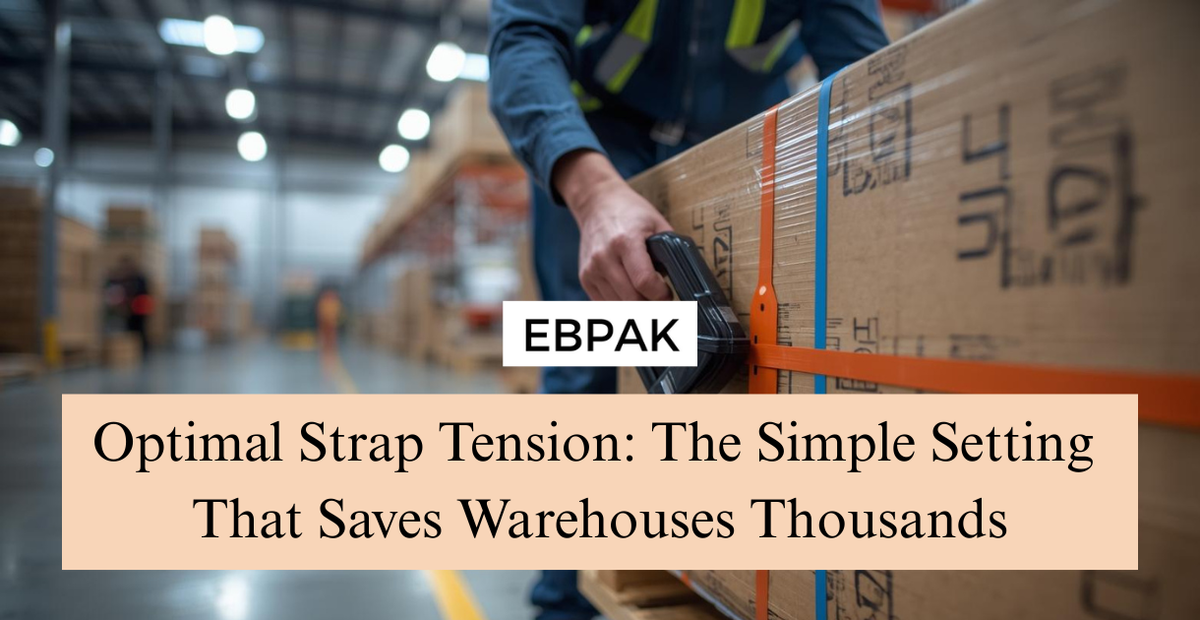
Strapping might be one of the final steps in your packaging process, but it’s far from an afterthought. In fact, the tension applied to a strap can be the difference between a shipment arriving intact or turning into an expensive problem before it reaches its destination.
At eBPak, we see it every day. Businesses invest in quality cartons, pallets, and handling equipment, only to overlook one deceptively simple setting; strap tension.
Whether the strap is too loose or too tight, it can cause problems. The cost adds up fast, through damaged goods, rejected deliveries, safety risks, and reputational damage.
So, let's unpack why optimal strap tension matters, how it impacts different applications, and how getting it right can quietly save warehouses thousands each year.
Why Strap Tension Matters More Than You Think
Strapping is designed to stabilise, bundle, reinforce, and secure loads throughout the supply chain. Whether you’re closing a corrugated box, securing a pallet, or bundling materials for transport, the strap’s job is to maintain load integrity under real-world conditions: vibration, movement, stacking pressure, and environmental changes.
Strap tension for shipping isn’t about pulling as tight as possible. It’s about applying enough tension to hold the load securely without compromising the product, packaging, or strap itself.
When tension is wrong, failures don’t always happen immediately. Often, they show up mid-transit or at the customer’s doorstep, where fixes are costly and trust is hard to rebuild.
The Risks of Too Little Strap Tension
Under-tensioning is one of the most common strapping mistakes, especially in high-volume or manual operations.
When straps are too loose:
-
Loads can shift during transport.
-
Palletised goods may lean or collapse.
-
Bundled items can separate.
-
Boxes may open under stacking pressure.
In industries where strapping is used for bundling newspapers, pipes, lumber, or concrete blocks, insufficient tension can quickly lead to unstable loads that are unsafe to handle. The same applies to unit loads of bricks, metal parts, or packaged glass. Once movement starts, damage often follows.
Loose strapping also increases the risk of workplace injuries. A shifting load on a pallet or skid is harder to control and more dangerous to move with forklifts or pallet jacks.
The Hidden Costs of Too Much Tension
On the flip side, over-tensioning can be just as damaging. Excessive tension can:
-
Crush or deform cartons and gaylord boxes (types of heavy duty mailing boxes used for shipping and storing bulk items).
-
Damage fragile or compressible products.
-
Cut into soft packaging materials.
-
Cause straps to snap or seals to fail.
This is especially relevant when reinforcing corrugated boxes, closing shipping containers, or securing coils of paper or steel. Applying too much force can concentrate stress at weak points, leading to strap breakage or product damage long after the load leaves your facility.
Over-tensioning also shortens the lifespan of your tools. Manual tensioners, seals, and even a strap sealer can wear out faster when consistently pushed beyond their intended operating range.
Understanding the “Best Tension for Shipping”
There’s no universal number that defines the best tension for shipping. The correct setting depends on several factors:
-
Strap material.
-
Dim weight and rigidity.
-
Packaging strength.
-
Transport method.
-
Environmental conditions.
Poly strapping (like our best selling 12mm x 1000m Hand Poly Strapping polypropylene 90kg), for example, is widely used because it offers flexibility and shock absorption. It’s ideal for many palletised loads and cartons.
It does require controlled tension to perform properly since if it's too tight, you lose its elastic advantage. If it's too loose, it won’t restrain movement.
Common Applications Where Tension Makes or Breaks the Load
Strapping is used across a wide range of environments, and each has its own tension challenges:
-
Bundling for handling and shipping: Newspapers, pipes, and lumber need firm but forgiving tension to stay aligned without bending or crushing.
-
Attaching items to pallets, skids, and crates: The load must act as one unit, especially during forklift movement.
-
Reinforcing wooden boxes, crates, and corrugated boxes: Including large formats like gaylords, where uneven pressure can cause panel failure.
-
Securing items to flatcars or flatbed trailers: Where vibration and wind loads are constant.
-
Unitising bricks, metal parts, or packaged glass: Where load stability directly impacts safety.
-
Closing corrugated boxes and shipping containers: Where over-tensioning can weaken box structure.
-
Securing coils of steel or paper: Where uneven tension can cause telescoping or deformation.
In every case, optimal strap tension protects the product, the people handling the products, and ultimately, the businesses financial and reputational position.
Tools and Materials Matter
Achieving consistent tension isn’t just about technique, it’s about using the right strapping solutions.
Poly strapping paired with reliable tensioning tools allows operators to apply repeatable, controlled force. Plastic duct buckle systems are another effective option, particularly for lighter loads or applications where flexibility and speed are priorities. These systems help prevent over-tensioning while still delivering secure restraint.
Using quality seals and a well-maintained strap sealer also plays a role. Poor seals or worn tools can undo even perfectly applied tension, leading to failure during transit.
If you’re reviewing or upgrading your setup, exploring our full range of strapping solutions can assist you with improving performance and efficiency when it comes to reliable tensioning.
Training and Process
Even the best equipment won’t deliver results without proper training. Operators should understand:
-
Why tension matters.
-
How to recognise under- and over-tensioning.
-
How different loads require different approaches.
Simple process checks, like testing strap tightness after pallet movement or standardising tension settings, can dramatically reduce damage rates.
Small Adjustment, Big Impact
Strap tension might seem like a minor detail in a busy warehouse, but its impact is anything but small.
Getting it wrong can lead to damaged goods, wasted materials, safety incidents, and unhappy customers. Getting it right improves load stability, protects products, and builds reliability across the supply chain.
At eBPak, we believe optimal strap tension is one of the simplest, most cost-effective ways to improve packaging performance, without slowing down operations.
Ready to Optimise Your Strapping Setup?
If you’re looking to reduce damage, improve safety, and find the best tension for shipping across your operation, our team at eBPak can help.
Get in touch today for advice tailored to your delivery loads, equipment, and all things related to ensuring the best practices for your packaging shipments that will arrive in perfect condition.
A small adjustment today could save your warehouse thousands tomorrow.